
Mermind is a mental health platform for college students offering a space for judgement free venting, track their moods and seek support. Jump to results ↓
Role
Researcher,
Product Designer,
Visual Designer
Timeline
6 months
Collaborators
Satvik Shrivastava
Me!

The Problem
College represents a crucial developmental period, where students face a tangle of numerous challenges across academic, social and personal domains. In a significant proportion, these stressors interact with genetic and psychosocial adversities, increasing the likelihood of mental health issues.
The existing support infrastructures (e.g SWC in IIT-B) fail to provide and match the safe and necessary space for students. Existing mental health tools are also either too generic, or too exposed to feel safe. We noticed a lack of awareness, existing stigma and no effective space to address these issues.


Research Strategy
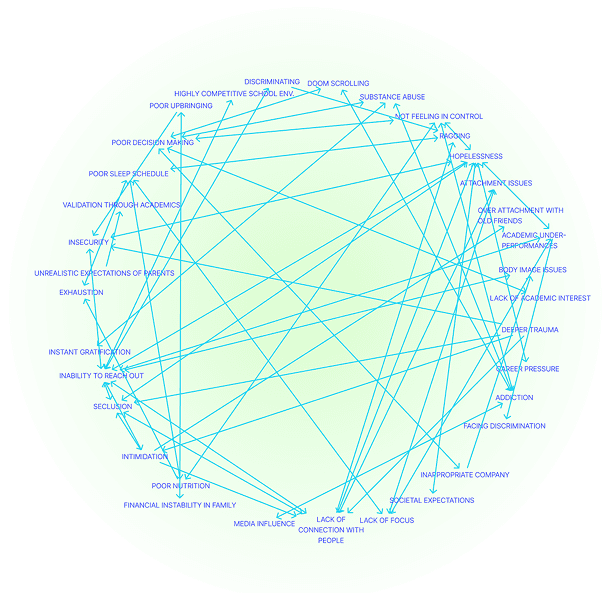
Our research was grounded in interviews and conversations with students and mental health professionals - personas representing reality; as well as literature on digital mental health, positive habit formation and the role of AI as it increasingly becomes ever-present. This surfaced key learnings and insights that shaped everything downstream:
Students found comfort in relatability and wanted to choose between that and solutions, not have one forced on them. They were afraid of being 'seen' but wanted community and a sense of belonging. However, misinformation and stigma were also rampant, especially with social media, which is why we considered anonymity to ease things.

Insights & Thinking
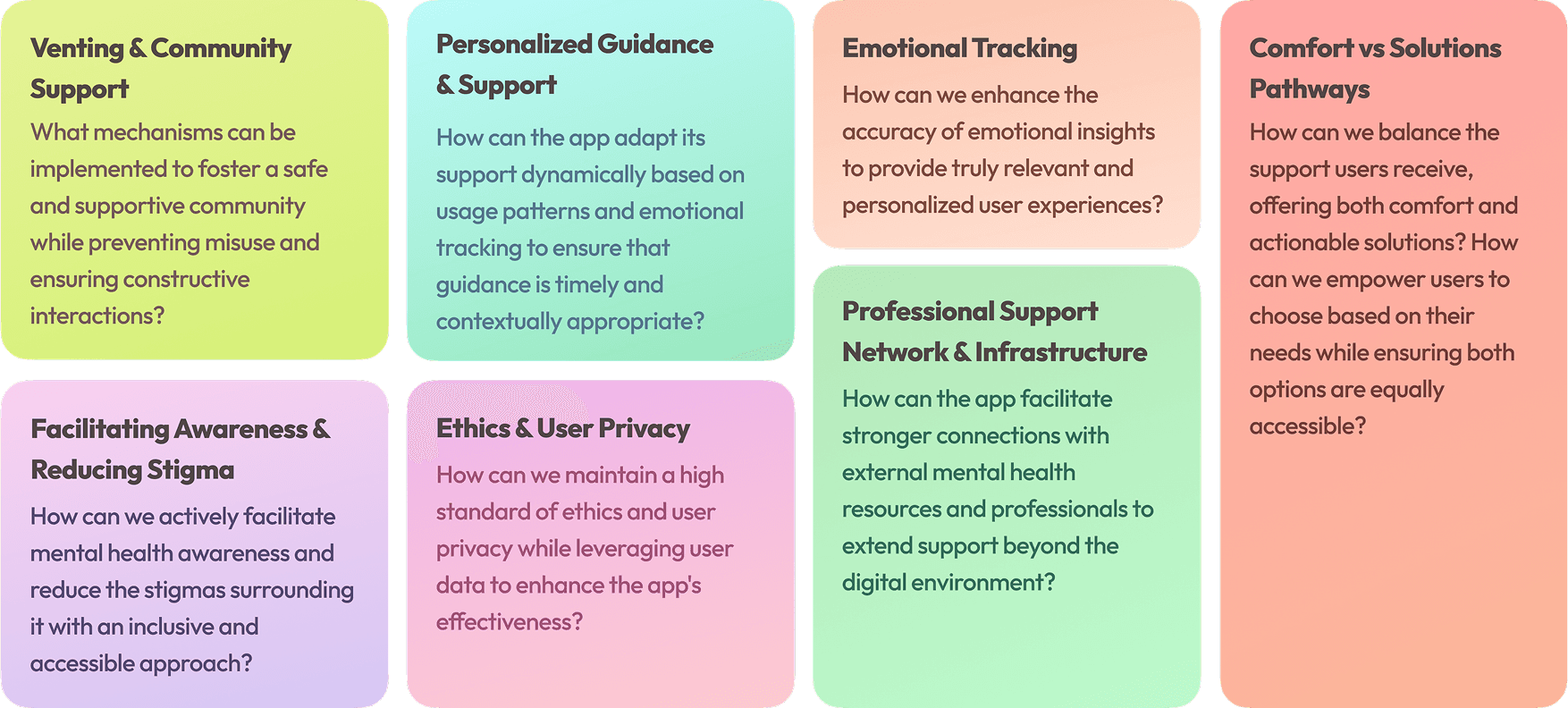
Research consolidated into seven opportunity areas, each framed as open design questions rather than a solution
Personalized Guidance & Support · Facilitating Awareness & Reducing Stigma · Emotional Tracking & Insights · Comfort vs. Solutions Pathways · Professional Support Network & Infrastructure · Venting & Community Support · Ethics & User Privacy
An Experiment to Validate our Findings
Anonymity as a spectrum, We designed an experiment to test the feasibility of an anonymous venting channel at the university level, inviting users to share their frustrations or rants in a completely anonymous setup. Rather than asking students if they'd use anonymous venting, we tested it in an unmoderated setting.
Anonymity earned honesty, but it also invited abuse, at a real rate, not a hypothetical one. This result validated the core premise and shaped the moderation model that followed.


How the System holds together
We built a solid conceptual framework of the system - showing the relationship between different system areas, how they interact with the user, data and each other.

Visual Design
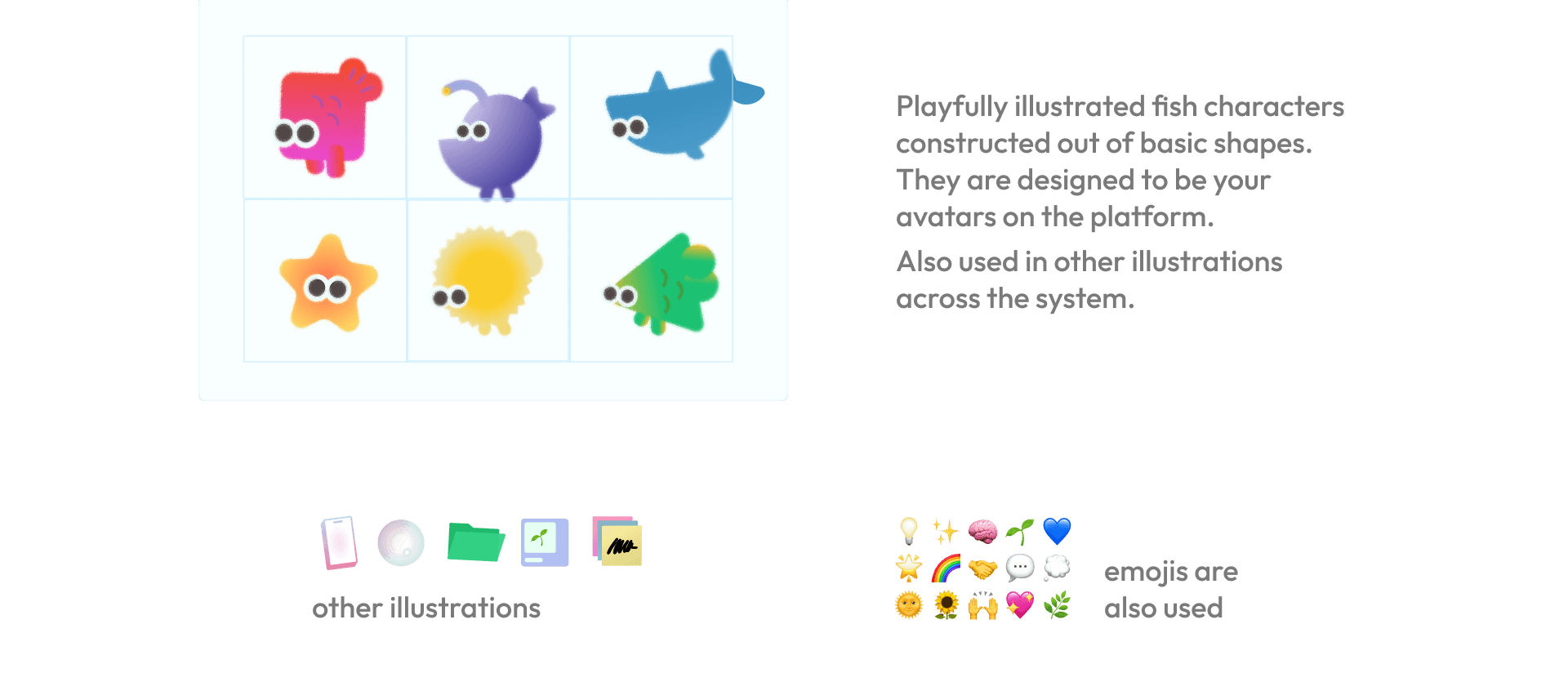
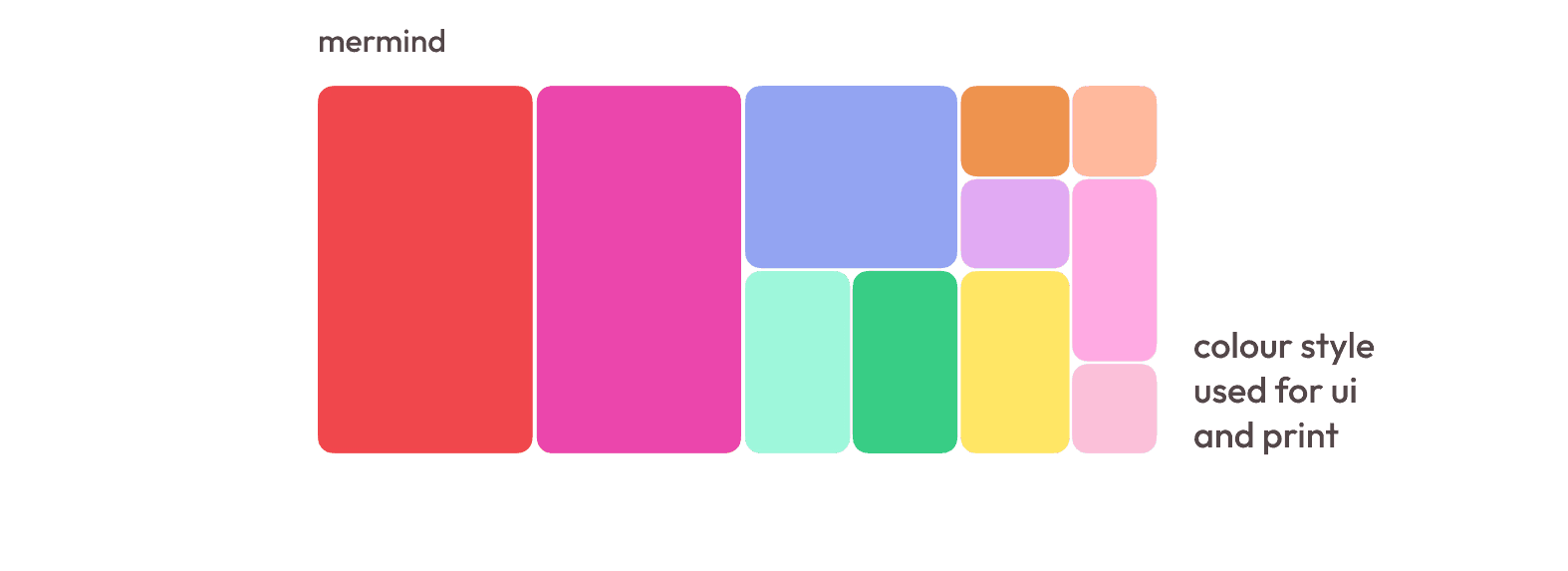
We drew inspiration from Tamagotchi-style pets before landing on a fish-based metaphor, tying naturally into "school" and ocean imagery that matched the name MerMind. That metaphor carries through the whole design and UI: mood states expressed through the fishes, soft gradients, and a card-based layout that keeps a heavy subject feeling light to navigate.



The Final Product
The final system - comprising of the MVP application and supporting print & design media - was prototyped and tested with users. You can try out the prototype for yourself here ↗ or watch the videos below!
Validation
We showed and tested the prototype with students across campus, as well as mental health professionals. A lot of praise was received for the initiative and solutions, as well as the structure and design of the apps. We received a lot of valuable feedback about onboarding and data collection, personalisation, safety features and data presentation.
What next?
This project was a great learning experience and something I would like to take forward in a meaningful way. However, somethings I would work on are auditing and simplifying the feature breadth, refining the mood tracking aspect, improve the data representation and design for empty and edge-case scenarios, that the timeline didn't leave room for.